Sunday, July 31, 2005

The death of the jazz festival

PICT1764

It's pretty sad when what used to be a major jazz festival is run by someone who declares things such as:

We have to draw up a very diverse programme. Today, there isn't a single jazz artist capable of attracting as many people as the site can contain. All the greats are dead.

One way to guarantee the non-jazzness of your jazz festival is to design it so that jazz musicians can't play there:

We have to book extremely festive things so that the sound from the different stages don't cover each other. This place isn't adapted to hosting Sonny Rollins or Keith Jarrett.

The article states that only four of the eight nights drew more than 6,500 people. Obviously, if your aim is to attract than many people a night, then there probably aren't very many jazz musicians you can book (none of the headliners for those nights were jazz musicians). The obvious question is, then, do you actually want to be doing a jazz festival? If it's designed so that the biggest-drawing jazz musicians (such as Jarrett) wouldn't be able or want to play there, surely the answer is no. Which is more worrying, to me, than a year-on-year dip in attendance (down by 10,000).

Friday, July 29, 2005

Higher stories; harry stories; higher bills.


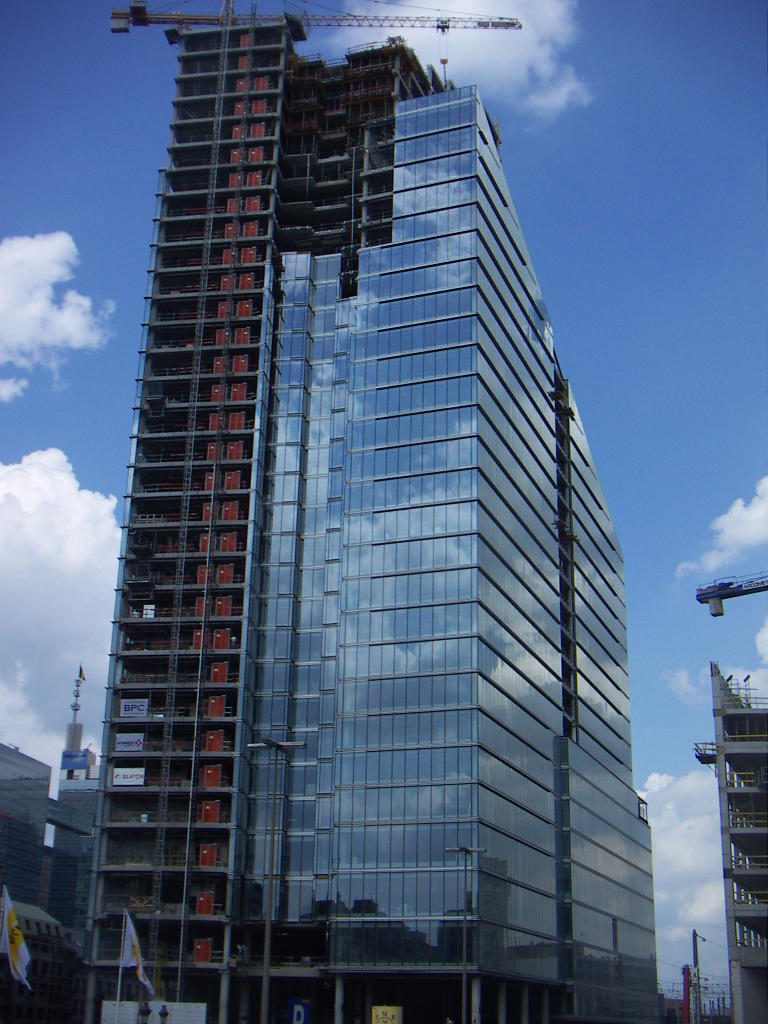
The Second Death Star-ish picture on the right is a new building. There used to be an old, decrepit tower there, of a similar size. It was so old and decrepit that I felt anxious whenever I walked past: it looked like it could collapse at any moment.

PICT1724PICT1723PICT1722

Debate raged between two English girls in the FNAC about Harry Potter and the Half-Blood Prince: why did Dumbledore have to die? the actor who plays Harry in the films is ugly and bad, why did they choose him? is Snape evil or not? Dumbledore was my favourite character, with Hagrid... The conversation unexpectedly veered towards Spandau Ballet, "an old boys band."

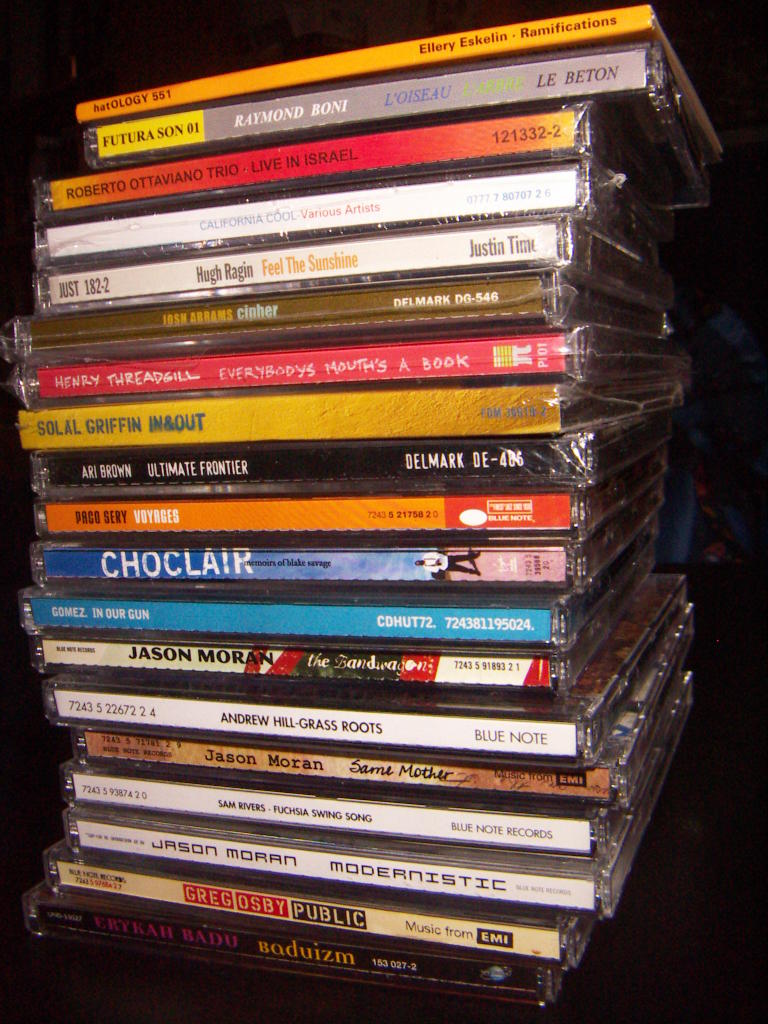
This year's summer sales haul. All of it. I think. It seemed unreasonable at the till, looks pretty tame now. What, me, endanger the monthly budget?


Oh, wait, I just found two more CDs (Fishbone Truth and Soul, James Grant My Thrawn Glory, a random 3€ buy: "thrawn?"). There may be a few more downstairs...

Flagestival Day 12: Tricycle - 28/07/2005, Brussels

PICT0936

I don't have much to add to the intial brief note about Tricycle, except that this concert was probably better, judging from my tone in that post (and the flute playing was fine).

The music continues to be a light-hearted romp through jazz-inflected popular/folk musics that recalled Parisian musette, jetted off to Brazil (where Floorizone first started playing accordion), paused on a North African rhythm or hopped over to Eastern Europe. It's happy, G-rated stuff, not quite as good as "The Incredibles" or "Finding Nemo," but better than "Hercules." The age range (from infant to senior citizen, and just about everything in between) of those assembled for the early evening outdoors concert and the ambiance (pétanque pistes had been set up on one side of the square. They were pretty low-quality, though: too many pebbles, not enough sand) attested to the music's spirit. Still, there was a more adult turn on "Kater" (hangover in Dutch), which started small, slow and slightly dissonant, looking for a little melody to ease the pain.

Tricycle shares a space with a much older and more famous trio, l'Ame des poètes (with guitar instead of accordion). I think that it's an important space: easily accessible, melodic improvisation based on songs (in the case of ADP) or rhythms or feels (for Tricycle) that everyone knows (isn't that why jazz musicians played standards in the first place?) and the whole family can gather around and have fun with. Of course, it doesn't hurt that these are (especially in ADP) are amazing musicians.

Wednesday, July 20, 2005

Pascal Schumacher Quartet - 18/07/2005, Antwerpen

posted from flickr

Two weeks ago we had gone up to the Hopper, a 45-minute drive away, to see Pascal and Jef in duo (something I've been waiting to see for a long while, a wait that seems justified, see below), but due to something of a scheduling conflict, the entire quartet was performing in South Africa at the time. They were replaced by a random band and a loud audience. This time, everyone was in their right place and the monday night Hopper crowd allowed itself to be tamed. The Hopper itself is an important jazz institution, doing in Antwerpen what the Sounds does in Brussels: a smallish bar that has a lot of concerts and gives musicians young and old space to develop bands, with month-long monday (and occasionally tuesday) residencies. The Sounds provides a more pleasant listening experience, though.

Almost a year ago, the PSQ won a French competition, the main reward of which is two days in one of France's finest recording studios. They're heading there in a couple of weeks' time, so tonight's concert was a bit of a preview for the group's second album, scheduled for release in November.

We stood at the bar for the first set, which isn't the ideal place for listening or comfort and my enjoyment was probably impacted. They started with Bud Powell's "John's Abbey," a fast bebop tune to warm up with. I don't consider the PSQ to be a bebop band and probably wouldn't like them nearly as much if it were their bread 'n' butter: I can think of better places to get my straight bop, so that's not where their comparative advantage lies. Things really started cooking with Neve's sure-fire "Blues for Mr. P.S.," by now an old favourite. The theme doesn't necessarily tell you it's a blues, but the piano solo does. Then came an exotic Mike Mainieri tune: a biguine-type bass and a tom-based (as opposed to cymbal-based) rhythmic pattern give off a slow, sultry Caribbean steam (kind of like a Bacardi ad's visuals), while the vibraphone melody delights in wide and oddly melodic intervals and the piano solos in a wonderful reflective (the use of octaves, perhaps?) Cuban mood. The first set ended with Schumacher's "Kitchen Story," which starts gently but discord erupts periodically, as if to evoke a blender's sudden cacophony. Metric shifts emphasise the mood swings as waltz becomes harsh 4/4 rock.

The undisputed highlight of the second set was a medley of Neve's "Flim Music" (new to my ears) and Cole Porter's "You and the night and the music" (they've been playing that one for a while). Neve uncorked one of his trademark intros, which are unpredictable (simple or complex, happy or sad or playfully weepy) but incredibly penetrating. Here, the key moment was a quiet, rising 3-note arpeggio that brought the chattering crowd to a talkstill through sheer simplicity and obstinate repetition. The song could then burst forth boldly and joyously, with something of a Keith Jarrett European Quartet feel. The transition to the Porter was handled as a demanding and magnificent piano-vibraphone duo: seamlessly blending water-surface textures, complex interlocking rhythms and fast unison lines, it was breath-taking. As an encore, we were treated to a Belgian premiere: a light, happy South African song learnt during the tour and powered by an irresistable dance rhythm.

Clearly, the band is still moving forward, even if many of the basic parameters are set. The old sense of joy of playing together is still there and individually, the players continue to evolve: for example, Schumacher seemed to me more fluid on four mallets than he used to. Tellingly, he never reverted to two.

Saturday, July 16, 2005

C + C Chocolate Factory

posted from flickr

Is it just me, or does Willy Wonka bear a disturbing resemblance to Michael Jackson? Inviting kids into his fantasy land, an eerie, otherworldly appearance, childhood trauma, barely coherent declarations...

Still, the first half of the film is utterly fantastic: the neon-bright caricatures meant to stick in a child's mind (eg. the evil-looking spies smuggling an envelope stamped "Secret Recipe"), the integration of real and CGI characters (Violet Beauregard's final incarnation is stupendous), Johnny Depp's Wonka, Burton's visuals... The Oompah-Loompah songs are a bit disappointing (I found the lyrics difficult to make out), Charlie himself is cloyingly sincere and the second half or so is a bit of a slog.

Trailers: "Herbie: Fully Loaded" got a unanimous thumbs up (on DVD) from the 3-person jury and the "Harry Potter 4" teaser recieved unqualified approbation. Amazon.co.uk tells me "Harry Potter and the Half-Blood Prince" was dispatched yesterday. I can't wait.

Thursday, July 14, 2005

14th of July

The military parade down the Champs Elysées, Jacques Chirac waving from a jeep, Mirages flying high above, a Frenchman winning the leg of the Tour de France and the bleu-blanc-rouge fluttering against a cloudless sky: things couldn't be better for patriotism to shine forth.

I thought I'd offer something a little more uplifting.

a star, an angel, chalk

Tuesday, July 12, 2005

Klinkende Munt Days 3 & 4 - 09,10/07/2005, Brussels

The photostream continues.

Beursschouwburg
The Beursschowburg contains two main spaces. On the second floor, there's the concert hall, a drab shoebox with black drapes hanging from the walls, and much smaller than you'd expect. Around it is folded a structure that twists unpredictably and space-wastingly on itself. Masochism seems to drive the architecture: speckled beige carpeted floors, destined to be trampled, muddied and splotched, inaccessible dead space, walls painstakingly made to look unfinished or deteriorated.

going up

Oddly, it's only on the ground floor that the rest of the structure becomes comprehensible. I say "oddly," because the main access leads directly to the second floor and because to get to the ground floor (which is where the bar and informal stage are), you need to exit the building and go one door up the street. Here, there are open, rational spaces (which is probably why they are so hidden) that maternally encase the tortuous upper floors. A charming place.

Day 3

The BBB

Ori Kaplan's Balkan Beat Box: "From New York and Tel-Aviv" a Masada for the post-hip hop/panglobal/DJ era. Drummer Tamir Muskat launches pre-recorded beats spanning hip hop, dub, 80s staccato drum machines, pounding rock or rocking dance from his laptop, and sometimes peppers them with vocals (Jewish schoolgirl playground chants? his own vocals processed and looped in real-time? a bit of both?), to great effect. The drums are almost just a prop to kick the whole thing into a furious overdrive at crucial points. The horns blare middle-Eastern melodies and exhort the crowd to scream and jump; the handlebar-mustachioed guitarist laconically distributes Israeli-rock solos; the mohawked singer/Mc/percussionist is insane and keeps the crowd energised, crowd-surfs to celebrate his success, shuffles along the thin platform that extends under the drapes for drama. "This one is for the children of Ramallah and Tel-Aviv," he says. Yet, the beat is more unstoppable machine than tender lullaby. The straight-to-the-point, relentless dancefloor music is interrupted only when Hassan is introduced. He takes a voice 'n' guembri solo, then picks up those hand cymbal things used to create the typical 6/8 pattern, and joins the band for Arabic-flavoured mania. Hassan's hat has a cord with a ball of cloth at the end of it, which swings non-stop as he plays. Awesome. By the end of the concert, calves ache, voice is hoarse. I haven't had this much fun at a concert in a while.

Day 4

Abdelhak Raha DJ Rupture

Nettle (DJ/Rupture and Abdelhak Raha on violin and oud) constitutes a radical departure from the breezy fanfares of previous days. "Violin and DJ" can seem odd, taken in isolation, but isn't, really, in context. When Raha plays the violin upright on his knee, the earlier technological assimilation is made clear, and it's sort of the same kind of thing as having the violin's sound processed by the DJ. When the Arabic community that had come early claps along to familiar melodies, the cultural subtext I'm missing is made concrete and coincidentally reveals Nettle's concept to be not all that different to that of popular crossover artists like Khaled. Or to that of many jazz musicians, who keep techniques created for the dancefloor even as they move away from it, which allows for exciting oscillations between the two poles.

Want a tower?

Nass El Ghiwane is apparently a legendary and politically radical Moroccan group from the '70s and 80's. I'll admit to having been more interested in the crowd's sociology than in the music. The first dozen or so rows were overwhelmingly Moroccan, young and male. They knew all the lyrics and reacted with an almost unsettling fervour, carrying each other on their shoulders and so on. Further back, the crowd became more European, feminine and observational. After about 45 minutes I'd had enough and went for a walk.

Pest

Pest sounded good on paper (Ninja Tune, cellist...), but turned out to be merely serviceable medium funk of the post-hip hop/acid jazz variety. The Fender Rhodes played its creamy chords and the guitarist unfurled a few good solos, the DJ/rapper livened things up from time to time and everybody danced a bit, eventually, but compared to the BBB's furore, it was all rather tame.

I dropped by the Kawa Jaipur Brassband's concert in the bar, but it was too hot and crowded. So I went and sat on the steps of the Bourse (Stock Exchange). It's a bit of a hotspot: it connects the touristy Grand'Place to the trendy Halles St-Géry and marks the northern limit of the Moroccan Gare de Midi area. It's an interesting place to eat a beef durum and drink a peach Bacardi Breezer late into a saturday night.

Friday, July 08, 2005

Klinkende Munt Day 2: Prelude and Dances - 07/07/2005, Brussels


I left work ridiculously early, affording me time to go back home and watch coverage of the London bombings: a terrible Western glimpse into daily life in Baghdad. As always, I'm torn between sadness for the victims and cynicism as to the credibility of declarations by Mssrs. Blair and Bush: denouncements of callousness and disdain for human life are hard to stomach, coming from those two.

seen on Antoine Dansaert

The trip back into town was happier than the thoughts above would have you think, even though I was bothered by my ill-advised wolfing down of two bowls of cereal. Going to the Nouveau Marché au Grains takes me further down Antoine Dansaert than usual, well past the Archiduc's art déco stylings and by all the chic, semi-underground designer boutiques. Sure, they're expensive, but the clothes are awesome. The festival's main tent is the bottom edge of a rectangle formed by the World Market's smaller tents. In the middle, there's a basketball court. One can buy food, jewellery and random stuff, or discover Kif Kif radio and their photos of the event.

some of the weird things on display at the World Market

The line-up and mp3s. My Klinkende Munt photo stream.

Marockin' Brass

Puns as band names are always dubious, and Marockin' Brass, who kicked off the festivities, is no exception. At least the name announces the aim clearly: horns over Moroccan percussion. Interestingly, altoist Cesariusz Gadzina, who released a good saxophone-bass-drums trio album early last year, is part of the band, and provided what was easily the most interesting soloing of all the musicians I've seen so far. It's fairly fun music, but too often the rhythm simply percolates somewhat disconnectedly behind the horns (the key word being behind). This is emphasised when the percussionists take off on their own, turning towards each other, increasing in intensity until finally antique brass instruments (like those long, valveless trumpets used in films set in the Middle Ages) let loose barely-articulate blasts.

merry-making during Cor de la Plana

Cor de la Plana is a six-man a cappella (apart from a couple of frame drums) vocal group from Marseille that sings Occitan songs. Their subtle and highly sophisticated use of polyphony creates a multi-layered sound in which who is producing what is, at times, dizzingly unclear. The music seems to tap into something ancient, rewriting popular clichés as it brings together reminiscences of both Gregorian and African chanting and rhythms, along with the old Italian and Arabo-Anadalucian influences that have traversed Occitan culture over the centuries. A farandole set off long lines of people dancing, hands joined, the likes of which hasn't been seen since, well, the Middle Ages. It's amazing the energy you can generate just sitting in a semi-circle, clapping your hands and stomping your feet.

PICT1225The action shifted to the Beursschouwburg's main building, a short walk back up Antoine Dansaert, for La Panika, a Bulgarian orchestra that plays the kind of Balkanic music made popular by Emir Kusturica's films. An incredible, festive explosion of more-faster saxophone/trumpet/clarinet/accordeon solos (a milder form of free-jazz glossolalia?) and wedding melodies over a solid four-man heavy brass section (I've seen three sousaphone players in two days, a decidedly odd occurrence. La Panika's elephant sousaphone was impressive, though) that even included a Wagner tuba and a snare 'n' bass drum team. The relentless tempos were broken up by the occasional (and very successful) dirge, as well as a young dancer in red. The crowd, needless to say, loved it, especially as a few Bulgarians turned up to lead the Belgian masses.

The festival is organised by the Beursschouwburg's idiosyncraticly-dressed director, and I've never seen someone take on so many roles at once: announcing bands, directing traffic, mingling with the audience, filming a concert and even serving beer to the musicians on stage.

the youngest member of La Panika, snazzily dressed - white shoes!

I had to leave a bit before the end of La Panika's concert, therefore missing Brad Shepik's organ trio... Despite another disappointment (after missing Soulive yesterday) I'm still determined to see Ori Kaplan's Balkan Beatbox tonight, despite a prior restaurant engagement earlier in the evening. And saturday's line-up looks promising, too, as well as edgier. And then there's Brosella on sunday. And then the work week starts again.

Thursday, July 07, 2005

Klinkende Munt Day 1 - 06/07/2005

The line-up.

Fanfares/marching bands have enjoyed renewed popularity for the last few years, seemingly on both sides of the Atlantic (Dirty Dozen Brass Band, Youngblood Brass Band, "Lose My Breath," "Hollaback Girl") and this year's Klinkende Munt (clinking coins?) festival will feature a lot of them. Except that over here, we don't really go for the brass button and big hat thing. The Orchestre International du Vetex marched into the tent (a judicious choice by the organisers, as it was raining and will be raining throughout the festival), remained at audience-level throughout their concert and immediately set the tone: joyous westernised Balkanic music, with hints of North Africa. A limited palette of fast to medium tempos and short hooky riffs, but irresistably popular and dancey. The brass (two trumpets, fluegelhorn, trombone) and rhythm (snare, bass drum, cymbals) dominated the other instruments (two flutes, two saxophones and that wraparound tuba thing). There was, of course, the drunk guy staggering around that inevitably appears at events of this kind. There's also only ever one of them at a time, so I wonder if there's a kind of Highlander thing going on, with catastrophic consequences if two should meet.

Orchestre International du Vetex

Antibalas came on next, serving up the Fela-derived Afrobeat expected of them: barely-finite songs that are essentially variations on a groove and horn riff, an impenetrably dense rhythmic backdrop (two guitars), harmonically simple, syncopated keyboard solos (with the same sound as Fela), sloganeering and dancing singer/percussionist, etc. I love the occasional gunshot snare hit (kind of like in reggae) that replaces the usual crash cymbal, which can't really be heard in the morass. But overall, it's too cloying and undifferentiated a meal; surprisingly undanceable (as opposed to merely a vague swaying), too.

I wanted to see Soulive, but having had only a few hours sleep the night before and facing a string of short nights (I definitely want to see Brad Shepik (with Tom Rainey!), tonight, and that starts at midnight), IVN and I headed home towards the end of Antibalas's set.

Monday, July 04, 2005

Fanning myself on the dancefloor because hot chicks don't sweat

posted from flickr

...and other friday night (and saturday and sunday) fever revelations.

- It really is a small world after all.

- Arno is chanson crunque. L'il Jon, 30 years older and a lot more (Belgian) beer, but the same bellow.

- The combination of excessive eating, below-average wine and a too-early move to (and on?) the dancefloor leads to stomachache but also to strange visions of a symphony orchestra with a big beat (and that doesn't sound kitsch).

- It's one thing when musicians make political statements from the stage, quite another when presenters tack their own random agenda onto a performance. Celebrations for Flanders's national day (11th july) have begun, which is apparently an excuse to play the "Vlaamse Leeuw" (Flemish Lion) and speechify. I turned my back to the stage in silent protest during the song (I would have done the same had it been "La Marseillaise"). The speech could just have been ye olde "Flanders First!" blabber (let each community (Wallonia & Flanders) find its own solutions to its own problems), had it not been directly challenged by singer Stef Bos's Dutchness and his wide-ranging (South Africa, Spain, America, North Africa...) influences and inspirations.

- Venus, baby!

- Playing songs live exactly like you recorded them is pretty boring.

- If you're going to put hundreds of dancing people into a room, make sure there's some kind of ventilation system in place.

- What happened to lounging around and doing nothing on week-ends? I almost miss it.

Sunday, June 26, 2005

Beery hot fun in the summertime


Is there really a better way to spend a hot sunday afternoon than to go to a beer festival? I've been trying to broaden my beer horizons lately, considering I'm in the greatest beer country in the world, and all. And one tires of Hoegaarden, Maredsous, Duvel, Palm and the like after a while. Under a surprisingly cool big white tent set up in one of Antwerp's main squares, there were 22 stands, 38 breweries and who knows how many different kinds of beer. No beer tent is complete without music, and there were not one but two brass bands and a bagpipes guy. Not exactly local colour, but whatever. It's not like anyone can get enough of "My bonnie lies over the ocean," anyway. And the brass band rendition of "Copacabana" was not to be missed.

Entrance was free, you paid 2 euros for an empty glass and then 1 euro for 20 cl. of any beer. We remained reasonable, sharing eight glasses between the two of us, but still had to go have a pita and take a long walk to make sure we were fit to drive.

The usual categories: blonde, brown (come to think of it, I didn't see any white beer, but there surely was some somewhere), monastery, trappist, kriek (made from a kind of cherry). Then, there were some less usual ones. We ended with Huyghe's (the makers of Delirium Tremens) Mongozo Coconut, which was not only good (and really did taste of coconut!), but also a fair trade product and could only be bought in Oxfam shops. Also of note were Contreras's incredibly rich Valeir Blond and Lefebvre's very tasty Barbar blond honey beer. I have no idea where any of these beers can be bought, which is rather annoying. Slightly less special, but still good: Bockor's Kriek Max and De Leyerth's brown Novicius Vertus, 5.9 degrees, refreshing (especially for a darker beer) but lacking a bit of body (unlike the lively breweress who served us).

We also picked up a book by Michael Jackson (yes, THE Michael Jackson: the biggest beer-writer in the world, the back cover tells us) on Belgian beer, which should speed me down the path to beer expertise. A nice wood handled bottle opener came with the book, a nice complement to the glass (specially made for the festival) we got earlier on.

Lennyyyyyyyyyyyy!


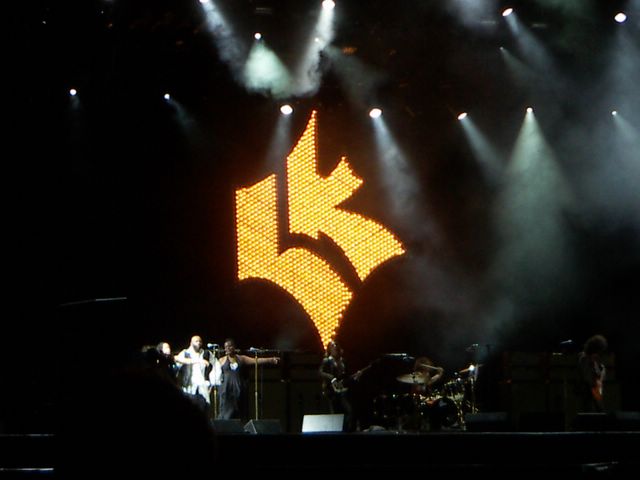
Yes, I know what you're thinking: "Mwanji, what are you doing, paying 56 euros (twice!) to see Lenny Kravitz, when you wouldn't even pay half that (once!) to see Sonny Rollins?" That's a good question. First of all, we didn't just see Lenny. We also saw Duran Duran. Secondly, we didn't pay, the tickets luckily fell into our laps when a friend couldn't go. So I popped my rock festival cherry for free with the TW Classic, in Werchter (rural Flanders; the main event is next week).

I'd never been to a big rock concert before. The kind with video screens (which, during Duran Duran, were lagging disturbingly behind the live action) so that you get to see more than inch-high stick figures. The kind in a big field, ringed by car manufacturers, banks, mobile network operators, magazines and food stands. The kind where it takes you half an hour to walk from the grassy parking lot.

Of course, Duran and Lenny weren't the only people on the bill. I would've like to have seen Novastar (Belgian piano rock songwriter) or Brian Wilson. But we found out that the tickets were ours fairly late in the day. So Duran and Lenny had to do.

Kravitz played what you'd expect him to play: new stuff like "Where Are We Runnin'?" and "Lady" (a poppier thing that's nowhere as good as the D'Angelo song of the same name), old stuff like "It Ain't Over 'Til It's Over" and "Are You Gonna Go My Way?" (as a second encore. IVN had lost hope, but I knew it was coming: AYGGMW is to Lenny what "Take Five" is to Brubeck.) and middle-aged stuff like "American Woman" and a very good "Fly Away" that closed the set before the encores. But I was disappointed by the way the songs were played. Impeccably, yes, it all sounded exactly like the recorded versions (which, in terms of singing, is more than many can say, but still). I was expecting more fire, more looseness, more eruptions. They came, inevitably, with AYGGMW, "Fly Away" extended itself to burst with life, but overall to many songs came and went without really affirming their reason for being outside of "Well, I've recorded these songs before, so I might as well play them."

Kravitz looked as you'd expect him to look: sunglasses at night, strategically removed to generate shrieks; nipple rings, revealed at the end when he ripped open his shirt; sexy (although IVN doesn't think so. I think she's wrong); rock star poses (a bit disappointing, though, because they struck me as having a forced stiffness, an odd combination, to say the least) that screamed "praise me!" He made declarations that seemed generous but were actually about himself: "It's an honour to play on this stage that has been blessed by Duran Duran, true living legends." Just like you, Lenny! "We're here for one reason and one reason only: to celebrate the greatest blessing of all: the blessing of life! Can you get with that, people?" Um, no, not really.

Kravitz brought who you'd expect him to bring: "the supergenius" second guitarist, with whom Lenny gracefully shared solos; Cindy Blackman [always a fun jazz trainspotter's moment. She may not be in the pantheon, but who wants to see John Coltrane in a bikini? Her solo may have been disappointingly senseless pounding, but she looked great in her black bikini with pearl beads hanging from it, long curly hair in a made-to-head-bang afro and amazing arms. "Does anyone want to come up here and keep Cindy warm?" Lenny asked. I'll let you guess as to the number of volunteers.]; three backup singers, one of whom was Isaac Hayes (you can see him for yourself in the photo), and a horn section, both of which brought the necessary soul/funk inflections. Okay, so Hayes wasn't singing backup, it was just someone who looked exactly like him.

So, what did we learn last night? Lenny probably said it best: "I love you all, but God loves you even more."

Saturday, June 25, 2005

Wiliam Parker Quartet ft. Leena Conquest - 08/06/2005, Brussels


William Parker - b
Hamid Drake - d
Lewis Barnes - tp
Rob Brown - as
Leena Conquest - voc, dance

It's been a while and I've lost my notes.

Beforehand, in discussion, this group was described by one member of the audience as being hard bop. Which it is. And isn't. Therein lies its greatness: populist and progressive, rooted and free. The tradition is to be heard straight-forwardly in Barnes's neatly articulated lines (even his occasional blurts are clean-cut); in Brown's piercing and heart-on-sleeve brand of bop, that finds its own third way between '60s volubility and '40s melodicism; tangentially in Leena Conquest's vintage soul voice, not the biggest, but secure and swinging. Then there are the two guys at the back.

Parker, who wrote the tunes and lyrics (spiritual and esoteric, not really my thing), takes off from simple and irresistably groovy Motown/Stax vamps and regularly lands in freer territory. Drake is one of those people who seems to embody what modern jazz is, or could be, or should be: swinging, yes, multicultural, omnivorous, passionate, churning. When Parker pulled out his guembri (Moroccan two- or three-string bass) and the pair jammed on a Gnawa rhythm for 10 solid minutes, I re-evaluated everything I had just heard. I even re-evaluated "Caravan." There was no glib appropriation: they were playing the rhythm for what it was, for the joy of playing it and showing that they knew it, but also for themselves, for what they are. And so, Drake's more swing-oriented playing took on another tint: its accents and fills, sometimes rock, sometimes reggae, sometimes gnawa, clearly became a beautiful sort of inverted prism: the different forms of rhythm blended into his own kind of jazz. And we're back to the tradition, but enriching it rather than living off of it.

Student music sucks. But the birds are hot.


It's astonishing how nostalgic students in their early- and mid-twenties are. At least, according to whoever DJs their parties. You'd think all these hip dressers and future leaders of the nation would be interested in dancing to something more forward-looking than Gloria Gaynor. Even the new additions to the canon get sucked into this vortex: "Seven Nation Army" can now be classified somewhere between "Billie Jean" and "I Will Survive."

Of course, a high density of pretty girls excuses pretty much any and everything.

Why is it that the conference of the birds is at its most intense and awe-inspiring just before dawn (light sky, no sun)? That's the real after-party.

Wednesday, June 22, 2005

Tagged


Since Clap Clap asks so politely... I hate this kind of thing, just like I hate "What's your favourite colour?" (what colour am I wearing today?) or "What famous person would you like to meet?" (nobody. Apart from Clap Clap, of course). I might just be able to settle on Mingus as my favourite musician, but have zero interest in meeting him. More related to this questionnaire, I really should make Beaneath the Underdog "the next book I'm going to read" one day. So, although I have no idea who this could possibly interest, here goes:

Total number of books I own:
Most of them are in boxes, as I've moved 7 times since 1996, and the ones in my house tend to be mixed up with IVN's, while who knows how many are somewhere in my parents' basements, but I'd guess somewhere around two-three hundred (I guess comic books don't count).

Five books that had a big influence on me:
Hmm, this is going to be difficult. Here's a fanciful, and thus weak (in the sense of not really adhering to its title) list:

1984 & Animal Farm, George Orwell: I was obsessed with them during the summer of 1995 and still refer back to Animal Farm regularly, especially when pondering the (d)evolution from the French Revolution's guillotining of the aristocracy to the Fifth Republic's President occupying the former's palaces. Georges Brassens also has a song about a courageous little white horse (aka "the most poignant song ever") that reminds me of AF. The two books are so closely associated in my mind that I'm not sure whether this counts for one entry or two.

Adventure Stories For Boys, ???: I remember the big yellow writing on the blue cover and particularly the story involving one Toledo Steele, who had a cane that hid a long sword-like blade. He was cool.

Sun Certified Programmer & Developer for Java 2 Study Guide (Exam 310-035 & 310-027), Kathy Sierra, Bert Bates: Admittedly, I didn't read it by choice and it makes no claims to being great litterature, but it's essential to why I do what I do and why I work where I work.

Social Theory of International Politics, Alexander Wendt: Simply because it's the only academic book I read cover to cover in my four years of university and the pair of degrees they produced. It's an interesting experience though: it allows you do discuss and disagree in detail with the big-timers.

Last book I bought:
Harry Potter and the Half-Blood Prince, J.K. Rowlings: I can't wait for it to arrive.

Last book I read for the first time:
Madame Bovary, Gustave Flaubert: I found it lying on a bookshelf, I have no idea where it came from, and figured I should read it. I felt all high-schooly, but better late than never. It's cruelly funny, sometimes beautiful, often painfully opaque (what are all those objects/clothes/etc. he endlessly describes?) and it was nice to read something in French again. Right before that came Michael Chabon's excellent The Amazing Adventures of Kavalier & Clay, which fits right in with my recent re-watching of the greatest super-hero movie of all time, The Incredibles.

Saturday, May 21, 2005

Alexi Tuomarila Trio - 16/05/2005


Alexi Tuomarila - p
Brice Soiano - b
Lionel Beuvens - d

It's been such a long time that I haven't been going to concerts regularly, that until last monday I'd forgotten about one of its principal dangers. Indeed, Antwerpen is a city in mutation, and a single false move - in my case realising too late that I was in a right-turn only lane - resulted in a half-hour spent wondering where I was as I weaved between roadworks and cement blocks carelessly and dangerously strewn in the street. As a result, I only caught the tail end of the first set.

I hadn't seen Alexi for a very long time either. He's made two good CDs with a quartet, but is currently playing quite different music with a completely different trio. While the Finnish folk music influence was present when he dug into his back catalogue, there was something different about Alexi's playing: slightly funkier, but at the same time sounding deeper and graver than before. This dual evolution was made plain on the last song of the set, during which a funky bass vamp underpinned abstract piano lines that reguarly hinted at the dance forms underneath.

Soiano and Beuvens kept up loose rhythms that transitioned easily from fast swing to open 60s post-bop to 70s funk and touches of Afro-Cuban rhythms and free. Their greatest challenge, though was probably overcoming the monday night Hopper crowd: past the first couple of tables, you would have been hard-pressed to realise music was being made over in the far corner.

Monday, May 16, 2005

Jorane / Saule et les Pleures - 15/05/2005, Brussels


Jazz is life... well, almost. It's nice to see a non-jazz concert that isn't The Roots!

Saule and the Pleures ("Willow and the Weepers") realised an excellent and all too rare mix of intelligent and clever lyrics, a good voice and equally good, surprising and original, even, music (or, more specifically, arrangements). In chanson française à texte, you tend to have limited (to be kind, *cough* Vincent Delerm *cough*) singers and above average lyrics. The music can vary from Brassens's extremely stripped-down rigour to more Gainsbourgian mash-ups. Saule sang about toilet ladies, a painful night at the opera (but in a way that was funny because you felt that he actually liked opera) and other everyday topics; the music was close to the chanson template (drums, double bass, acoustic guitar/singer, electric guitar, keyboard/percussion), but at times rock or hip-hop intruded (and mock-opera on the above-mentioned song), hinting at open minds. Their first CD is coming out later this year and if there's any justice it will do well, as in their short set I heard at least two potential hits.

Jorane: a girl, her voice and her cello (and a guitarist). I first saw her on Ray Cokes's show on Arte and thought my girlfriend's family would be interested in seeing her (her littlest sister plays cello).

More mystical/hippie than the opening act, she opened with transporting grainy cello notes and wordless Celtic/New Age-y vocalising and later tried out some slow, langourous, Orientalising melisma. At one point I feared that that was all there was (which would have been okay had I been lying down, or at least sitting), but they regularly veered into dynamic rock (the guitarist made good use of his pedals when on acoustic guitar and threw in some steel guitar for variety), notably after Jorane recounted the tale of an interviewer claiming to detect Led Zep influences in her music and inevitably launched into an LZ-inspired rollick. She also played electric and acoustic guitars, which set the scene for more folk- or blues-rock oriented songs.

Sunday, May 08, 2005

Junk food


Elodie Lauten:

Does improvisation have a bad name? I had a discussion about improvisation with a friend who had graduated from Juilliard. He sat at the piano and placed his hands on the keys randomly and laughed... and said improvisation was junk. After years of training and dedication to play anything written for an instrument, doing something spontaneous is a sin, a criminal act, or at least a ridiculous behavior.

It's strange, to me, that after a century of jazz and decades of easy access to improvised musics from around the world and the knowledge of the place of improvisation in classical music, such opinions can be so glibly tossed around. Lauten herself recognises some of the value of improvisation (Improvisation is not junk, it is hard work) but also fails to take it (within the context of a medium-sized blog post) as a practice in itself that needs no other justification (creation of a work, under-rehearsal, cost-cutting).

I wonder if musical training that put improvisation and personal creativity on the same level as it does reproduction would not ultimately be better. Perhaps when Mozart could write "Twinkle Twinkle, Little Star" as a child because he felt free to improvise and create?

Een avondtje uit


Antwerpen is a great city, much better than Brussels. Crossing the city on foot, you start by the river (Antwerpen is among Europe's biggest ports) and on your way to a small bar you pass:

- a surprising multitude of sex shops, from the trendy feminine/woman-friendly brightly-lit and colourful variety, to the ominous "Toys 4 Boys" and its display of leather masks;
- innumerable little shops sporting the latest in interior design (the city has been an emerging European fashion centre since the early '90s and the people here tend to be a step ahead, IMO);
- old brick houses, one displaying a "Anno 1515" plaque;
- an open space surround by brick walls that have been taken over by the brightly-coloured fantasies and harrowing psycho-dramas of graffiti artists;
- churches;
- the statue of Brabo throwing the evil giant's hand (hence the city's name: hand-throwing);
- weird little odds and ends.

And the whole time, there is no loss of continuity in the mix of residential, cultural, sexual, social and religious spaces. Try doing that in the nation's capital.

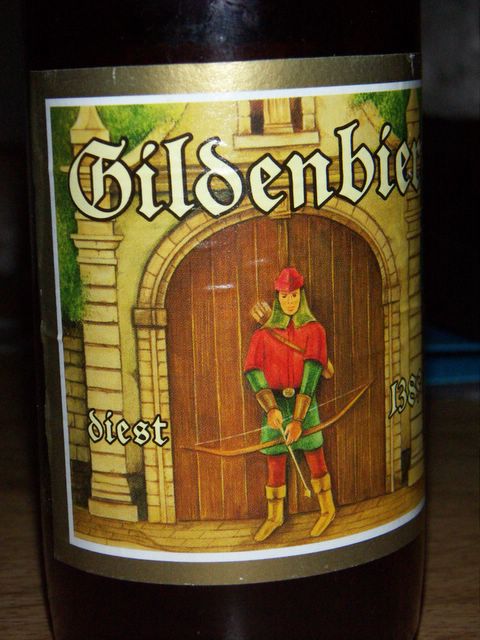
To cap it all off, I discovered a delicious brown beer (Gildenbier) and listened to a sax trio playing standards passably ("Softly, as in a Morning Sunrise," "Satin Doll," "All Blues," "Stolen Moments") and then some blues in the company of a Chinese-born Antwerpenaar who is my girlfriend's grand-mother's partner and sings and plays guitar like a Mississippi backwoodsman.

Thursday, May 05, 2005

Henry Grimes Trio - 04/05/2005, Brussels


Henry Grimes - b
Marilyn Crispell - p
Andrew Cyrille - d

First of all, long live whoever was responsible for last night's concert being non-smoking. Being able to breathe freely and not coming home smelling of smoke is such an enjoyable experience that I'm surprised that anybody could still plead for the "atmosphere" of smoke-filled environments. I was a bit less taken with whoever was responsible for the concert starting an hour late (the musicians walked into the bar 45 minutes after the official starting time). Behind the beat, I guess.

I know fairly little of the three musicians. Grimes mainly from Don Cherry's "Complete Communion" (he was wearing a pink plastic medallion around his neck containing a picture of Cherry and him taken at that recording session) and the story of his re-appearance after several decades; Andrew Cyrille from a Trio 3 album and Marilyn Crispell pretty much not at all. A pretty good learning opportunity for 5 euros.

Grimes kicked off the concert with a long solo consisting of noise interspersed with rough-hewn versions of familiar intervals and progressions. When he picked up his bow and Crispell joined in, the amplified bass and the crappy piano joined forces, creating a poorly-audible result. Interestingly, during the 15-20 minutes that all this went on, Cyrille inaudibly rustled his brushes on a tom. When the drummer finally cut loose, the trio broke into very dense free improvisation, the kind that lacks dynamics, harmony or rhythm: like a cliff's sheer facade of natural granite, its pleasure resides precisely in this relative featurelessness, combing with imposing presence and visceral power.

Cyrille demarcated thematic sections (I feel like calling them chunks) of this 50-minute piece with a sudden, single, loud cymbal and drum crash. Crispell started to mull over a series of Spanish-tinged, percussive motifs to a quieter accompaniment, so that when the energy level returned to earlier levels, the music was clearer and less forbiddingly austere. The piano found itself heading in an atmospheric direction filled at first with swirling, dissonant arpeggios and later with "pretty" and even syrupy playing, while the other two provided a consistently (relatively) quiet-but-turbulent background.

The second piece was quite different in feel: Grimes was walking, the piano played in a more linear fashion, Cyrille was set on a sort of loose-limbed loop, so that there was a sense of tempo, of swing even. A loud cymbal-washing/daybreak/Coltranian intro section gave way to a concluding arco bass drone and simple and hopeful folk dance-like modal playing from Crispell. Just before that, Cyrille had produced a crowd-pleasing solo of various straight-up dance rhythms.

I thought that, at 11:15, the concert was over (and I wasn't alone in thinking that), but at midnight the musicians took to the stage (well, to the floor at the back of the bar) once more. I'll admit to not having been very focused (hey, I woke up at 6 that morning), but I did enjoy some unexpected quasi-Abdullah Ibrahim joyous hymn playing from Crispell.