Saturday, July 08, 2006

Jammin' The Blues

I'd wanted to see this for the longest time, finally YouTube makes it possible.


The greatest music video of all time. So many great shots, from the very first one of Lester's hat with smoke swirling around it to the last one of Jo Jones's grin.

Friday, July 07, 2006

Klinkende Munt 2006 Day 2 - 06/07/2006, Brussels


I skipped day 1 to watch France qualify for the World Cup final. Priorities.

Acoustic Ladyland
The band name initially faithfully represented its music: modern post-bop jazz covers of Hendrix tunes. To be honest, it was a little boring. Between their first and second albums, they morphed into an instrumental rock-almost-punk band. Last Chance Disco is really good and fun. Now, it would seem that they've morphed fully into a punk band. The ingredients remain similar (Pete Wareham's rough-hewn tenor saxophone wailing and declaiming of simple, punchy riffs, Tom Cawley's finely-textured keyboards, Tom Herbert's pared-down electric bass and Seb Rocheford's drumming, either everything-at-once punk or beats with more room to breathe), but there's more singing by Wareham, more decibels and more wall-of-sound-ness, especially on the new songs that will be on their upcoming album (or maybe I just haven't listened to Last Chance Disco loud enough).

I tend to prefer their songs that are less dense and have more rhythm, so I was a bit disappointed there weren't more of them. At those times, Cawley's crucial contributions became clear. At the band's loudest, the sound system struggled with the volume: the saxophone was often a bit lost in the mass and the keyboards weren't very clear.

Afterwards, I discussed MySpace (a recurring theme, it would turn out) with Tom H. and the Hnita's Peter Anthonissen. Teun showed up and informed me that Jef had signed with Universal Music (Belgium).

Clotaire K
The highlight of this concert was when a guy came on stage wearing a skull mask, Freddy Krueger claws, a black t-shirt and shiny suit era pants and danced around, mock-attacking the other band members. Apart from that, it was semi-convincing 10 year old IAM with a dash of North African influences. It didn't help that the front man kept on berating the crowd, even though little of what they were doing deserved wild enthusiasm. At one point, the DJ would scratch for 5 seconds, then stop, and applause would be demanded. Over and over...


Soweto Kinch
I was eagerly awaiting this one, as I'd never seen Kinch live and really like Conversations With The Unseen. I'll get the disappointing parts out of the way first. One, the repertoire was mostly taken from the two year old album, but in virtually identical arrangements. While "Snake Hips"'s pot-pourri is still pleasant to hear, I expected far more deviation from the record. Two, it was more traditional than I expected. So there were a lot of solos that failed to really matter. Kinch is unabashedly a bop-derived alto player, which isn't a problem - it actually highlights and enhances the newer hip hop elements he brings in - but while he's got plenty of technique, too often I didn't feel like I was getting more than that. Now for the good stuff.

Kinch is a super-charismatic stage presence: funny, spontaneous, outgoing, charming. He's a good rapper and an excellent lyricist. "Jazz Planet" has a cheesy concept (what if jazz was the dominant music?), but the words and flow make it work: "What if jazz could solve world wars/And swinging on 2 and 4 was a government law," a bit about boy bands scuffling for work and lip-synching being a dying artform practiced only at summer camps in Dartmoor (Dartmouth?), DJs sitting back at concerts and muttering about jazz musicians stealing all the gigs, etc. "Adrian" started out as a fairly traditional bop ballad, but in the middle, Kinch rapped mesmerisingly, at a slow tempo and with just the bass as accompaniment, about the song's hapless, tragic hero. Before going off stage, Kinch requested six words from the audience for a freestyle. They were: North Korea, peace, cables, fever, hip hop and bebop. Kinch linked them all together impressively and imaginatively, with each key word preceded by 3-4 lines that allowed it to arrive naturally and climactically.

The encore was "A Friendly Game Of Basketball," by far the best instrumental piece. After a ricocheting head, trumpeter/singer Abram Wilson took a solo that started to bring the energy level up, Kinch and drummer Troy Miller then proceeded to engage in the most hard-driving uptempo improvising of the night. It was fantastic, but at a level they should have reached after a few songs, not right at the end.

More photos here (wardrobe alert: I have the same blue short-sleeve shirt the bassist is wearing, and might even have worn it yesterday if I didn't need to sow a button back on).

Wednesday, July 05, 2006

news from the fringe

Is it just me, or is this article incredibly condescending?

None of these 12 [composers], I think, will ever have festivals devoted to them. Their chances of big commissions by major symphony orchestras or opera houses are equally dim. (...)

Posterity does not beckon. There may be no entries in future music encyclopedias. Scholars will not pore over their techniques or the cultural contexts of their lives. Yet these composers are obviously devoted to their work, and to one another's work as well. A lot of them know exactly what they are doing. How high they aspire I don't know. I hope their aspirations are more on the order of personal satisfaction and the collegiality of fellow artists than of fame. (emphasis mine)

+

Sean Murphy Ortega, aka Jack Reilly, comments on this thread:
What is it with you liberal freaks? Can't you accept another viewpoint and that it's ok to create a pen name? For openers, try Voltaire then jump to Eric Blair.

Petranich is a journalist's journalist, but you wouldn't have a clue to what real journalism is, you're to busy praising yourselves and the Taj Google.

Such prittle prattle. You'll be reading about yourselves in the next A.C. book.

Always nice to hear from him, even if I have no idea what the A.C. book is or what praising Taj Google means.

Tuesday, July 04, 2006

letting freedom be downloaded

Destination: Out is "An mp-free jazz blog focusing on rare or out-of-print music." I'm not a big downloader, but the bite-size offerings on offer are appetising.

[via Bagatellen]

cookie jar

More TV On The Radio: Status Ain't Hood and Brooklyn Vegan [via Darcy] on the Propsect Park concert.

Apparently, Return To Cookie Mountain doesn't have a US release date. That's a shame. Belgian readers can buy it at the FNAC for barely more than it costs to download it from iTunes.

Speaking of CD pricing, is it totally passé to consider 15 euros a decent price for a new CD? Especially since download services (apart from emusic) sell albums for 10 euros or when buying directly from the musician. However, I'm aggrieved and puzzled every time I see ECMs that have been in print for over 20 years being sold for 20+ euros...

Monday, July 03, 2006

lining the nest


Rare enough to be mentioned: Sonny Rollins guitarist Bobby Broom gives it up for jazz writers.

Remember when part of experiencing a recording for the first time meant reading the credits and liner notes? That was fun reading and so meaningful to me when I was a kid, trying to understand jazz music. There was so much for me to learn and try to make sense of at that time. In my quest to sort out the order of things in the universe of jazz—the seminal figures, their supporting casts, the various groups of players—in other words, the roots and branches of jazz’s family tree, I looked to the back covers of records as my elementary aid in understanding the music.
(...)
Because of the socio-political ramifications of jazz, it has always needed scholars and other genuine arts supporters to champion its cause and its musicians, and to help elevate these to their rightful place among the great musical and cultural contributions of the world. French jazz enthusiasts, Hugh Panassie’ and Charles Delaunay were serious supporters who spoke for jazz and helped pave the way for writers such as Albert Murray and Amiri Baraka; musician and scholar, Gunther Schuller; and jazz critics, Rudi Blesh, Leonard Feather, Ira Gitler, Nat Hentoff, Dan Morgenstern, and others. More recent jazz thinkers, like Scott DeVeaux (The Birth of Bebop – University of California Press), Doug Ramsey (www.artsjournal.com/rifftides/) and Joe Moore (www.jazzportraits.blogspot.com), continue to keep up with jazz as art, rather than ordering it according to what is marginal and popular, or worse yet, providing misinformation.
(...)
Once upon a time, liner notes were included along with the music as a part of the package—as a way of enhancing the music experience for the listener. They were written by jazz lovers, who intermingled and fraternized with their subjects, and who in varying levels and ways respected, identified with and understood what was special about the jazz musician’s form of expression. Of course, not all liner notes were accurate, informative works of art, but there existed a proper and fundamental understanding of hierarchy, of authority in the relationships between artist, consumer and critic. The means of conveying that understanding, liner notes, is sorely missed by this music lover.

I'm reminded of Wayne Bremser's iTunes versus Preservation article. I took slightly too harsh a swipe at a similar article that no longer seems to be available online.

CD may have thoroughly modified cover art, but it completely killed liner notes. On LPs, you could read them in the store and maybe use them as a purchasing aid. Now, you can't do that anymore. When the liner note writer is talking to effective rather than prospective buyers, the subject matter has to change. Is there really a point to them any more? The added value of liner notes needs to be rethought.

That said, I, too, generally enjoy liner notes. For the longest time, I've been wanting to start a "liner note wisdom" series, but I tend to read them downstairs and the computer is upstairs... Still, old liner notes serve as neat summaries of the state of criticism at the time. The old school musician interview format is often interesting. Then, there's the musician-penned essay, which Brad Mehldau has taken to new, but very interesting, lengths with House On Hill. Ellery Eskelin also writes interesting ones. The Figure Of Speech liners are by Kevin Whitehead, but they're essentially an interview and continue to serve as a useful manifesto for Eskelin's approach. Perhaps integration between CD and website can bring worthwhile new forms.

Totally unrelated: TV On The Radio's Return To Cookie Mountain is totally killer.

flutes #2

From the comments to this post on jazz flute, Lloyd says:

I think it's crazy that someone should call it an 'imperfection' - and a little arrogant too... There are so many different colours from all intruments and the breathy sound is part of the flute's spectrum, as far as I'm concerned. Just as with many others. How can the music world be without it?

I think the "imperfection" was meant in comparaison with classical flute playing. Compared to classical technique, just about every jazz musician is imperfect. Of course, the comparaison is of limited use, and could go both ways.

Check out Lloyd's blog: each post is a photo of a hand-written page in a diary, placed, in Amélie Poulain fashion, in a different location every time.

entering the post-record store era

July is here, and July means cheap CDs by the boatload. As usual, I headed to the Brussels FNAC. I hadn't been there for a while. Since April, in fact, when my work assignement was switched to Charleroi. In those few months, the dire predictions of friend and FNAC jazz guy P came to pass: the section has been moved and slashed and now shares space with the World Music section. The reorganisation hasn't only affected the jazz section: there's less space afforded music, whatever the genre. The halcyon days are definitely over, so get what you want while you still can. I don't even know if P still works there: the section has no desk, so maybe some people got fired. That didn't stop me from getting a boatload of stuff, but there's an unpleasant after-taste.

In (unverified) chronological order, commentary based on first listens:

Miles Davis Sorcerer
David Bowie Low (my first Bowie)
Paul Bley Circles

Chet Baker/Philip Catherine/Jean-Louis Rassinfosse
My first late Baker and early Catherine. Beautiful. Baker's well of prettiness has run dry and much of his technique has disappeared, but his mind is sharp. Attacks and articulations are regularly fluffed, but there are no major disasters, which lends a miraculous quality to everything that goes right. Meaning just about everything else. Knowing only the latter part of Catherine's career, I was surprised by his chops. I wonder if he could (or even want to) play like that today. I wasn't surprised by Jean-Louis Rassinfosse's great technique, since he clearly still has it. I'm thankful he's dumped the stand-up electric bass in favour of an acoustic double bass, though.

Björk Selmasongs
V/A Let Your Yeah Be Yeah: Reggae Chart Hits 1968-1980 (I don't even really like reggae, but this was 3 euros)
Ozark Henry Birthmarks and Sailor Not The Sea

Vandermark 5 Free Jazz Classics Vols. 3 & 4
These are the bonus discs that came with the limited editions of the last two (I think) V5 albums. I don't have those albums, but I did hear them live around the time Vol. 4, a set of Rahsaan Roland Kirk covers, came out, and they were fantastic. the price was right (15 euros for two discs), so I didn't hesitate. I've listened to Six For Rollins and I can't say I was overwhelmed. It's very much a repertory approach (who was it that tagged Vandermark "the Wynton Marsalis of free jazz"?), so you get V5 meat 'n' potatoes, but not a lot of gravy. "John S" struck me as particularly stiff: the head is weighed down by a plodding three-horn arrangement and Vandermark never really catches fire, here or elsewhere on the album. While Rempis's solo breaks the theme into flinty shards over a clever fast walking bass and drums that punctuate rather than flow and Bishop adds some humour towards the end over laid-back swing, it's not enough to counter-balance the initial impression. I hope the Kirk disc will be better.

Brad Mehldau House On Hill (this deserves its own post)

Tv On The Radio Return To Cookie Moutain
I loved TOTR from the moment I first heard "Staring At The Sun" on the radio, well before I knew what they looked like. I didn't get their first album, which I now regret. Coincidentally, Bowie makes a wouldn't-know-it-if-it-wasn't-written cameo. On first (and so far, only) listen, I had some trouble until tracks 4 and 5, "Playhouses" and "Wolf Like Me," which I already knew and are the album's most "Staring At The Sun"-like moments: lots of treble fuzz, pleading double-voiced vocals, a scattered beat for "Playhouses," a more danceable one on "Wolf Like Me." After that, it all flowed nicely.
Nate Chinen concert review; Jon Caramanica's Village Voice feature that reminded me to buy this album.

Sunday, July 02, 2006

Triosk - "Intensives Leben"

Triosk: Australian piano trio that takes EST's piano trio + electronics/studio processing a whole lot further. On "Intensives Leben," the cymbals clatter, the keyboards shimmer and occasionally distort, the acoustic bass provides a little bit of melody, rhythm and direction. It's pretty cool.

Download "Intensives Leben" or stream it on MySpace. More from Triosk.

world cup update


We used to suck
Now we rock
Explain that
--
Informal surveys show
Italian flag most
Popular window-dressing accessory
--
Penalty kicks: avoid
When playing Germans or Portuguese
(especially if you are English)
--
Seen in stores, t-shirt
France Brazil 3 - 0 July 12 1998
How I wish I could
Have worn it to work today

Saturday, July 01, 2006

the herbie debate


Ben Ratliff:

Mr. Hancock, the pianist, came on stage with an acoustic quartet that included the saxophonist Wayne Shorter, the bassist Dave Holland and the drummer Brian Blade. The performance only lasted half an hour, but they played an enormous amount of music.


Howard Mandel

Pianist Herbie Hancock has recorded one perfectly sublime jazz album (Maiden Voyage) and a couple of dozen significant others. He’s composed two simple, irresistibly catchy tunes (“Watermelon Man,” “Chameleon”) that will be jam session favorites as long as there are fake books and garage bands, plus the first mainstream single to feature scratching (“Future Shock”) and the first jazz sample (from “Cantaloupe Island”) featured in a huge crossover hit (“Cantaloop” by U.K. DJs Us3). He helped galvanize Miles Davis’ exploratory ’60s quintet, popularized the Fender Rhodes electric piano and delved deeply into synthesizers while never abandoning the classic grand.

So why are his concerts so dull?
(...)
Two pianos stirred by virtuosi such as Hancock and Rubalcaba can’t possibly sound bad in a concert hall like Carnegie, but they are challenged to sound meaningful.
(...)
Where is Hancock as leader of this gang? Why can’t or won’t he make a statement, rally his troupe to focus its expression, reach out to the listeners, wrap us in the music and take us higher? If jazz doesn’t do that, if it only wants to be admired, it’s ready for burial now.

Has Herbie Hancock lost his edge? Physically fit, active and articulate, maybe he's too comfortable. Chilled. A California Buddhist, multiple Grammy winner and NEA Jazz Master. Fulfilled. Yet ambition, conflict and desire have always lent jazz excitement.


On Rubalcaba, an amusing tidbit from Ratliff:

His solo set on Tuesday night at the Jazz Standard was totally, purely meant for the concert hall. And the concert hall might not have been good enough. A soundproof room, maybe. On the moon.

Thursday, June 29, 2006

Lizz Wright @ Flagey Studio 4 - Brussels, 28/06/2006

When Lizz Wright's first CD came out, I assumed, from the ads and things read here and there, that she was some vaguely jazzy neo-soul post-Norah Jones singer, and promptly ignored her. Last night, she proved me thoroughly wrong: Wright is a superlative heir to Cassandra Wilson (and maybe a little bit to Ben Harper, too). The latter is present in Wright's voice (beautiful, deep, enveloping, warm, pitch-perfect and taking just enough unexpected turns to keep it interesting), the slow-paced guitar/percussion setting and choice of material (acoustic rock song covers, Madonna's "Stop," funk, blues, a bit of gospel, all done with a jazz-derived sensibility and harmony). When Wright said she was "trying to recreate that small, country feeling" she had grown up with, it was like she was starting from where Wilson has ended up.

Wright's voice was always effective, even on the MTV Unplugged-type material. The more stripped-down the arrangement, the more poignant Wright's voice became. The clearest demonstration of this came on the second encore (of three), when Wright and guitarist Marvin Sewell played "Amazing Grace." Not the most original choice, but they created a dramatic, cathedral-like stillness. Pierre Van Dormael had told me about a night spent playing impromptu voice-guitar duets in Wright's Parisian hotel room. I now understand his elation at the memory.

Throughout the concert, Sewell's sheer tone, loose-limbed phrasing and harmonically advanced blues playing made it obvious why Jason Moran added him to the Bandwagon for Same Mother. But Wright remained the star of the show, thrilling the sold-out crowd, and converting one non-believer.

Wednesday, June 28, 2006

i'm still in touch with the world

Tuur Florizoone has a new website. The most original section is the Erratum page, which lists the various ways his name has been written, ranging from Tuur Verbruggen to apparently incorrect Mandarin.

+

Ellery Eskelin discusses his next album, which won't be on Hat Hut, but on his own label. More composed than Ten, and with singer Jessica Constable and a second keyboardist joining the core trio on some tracks. Tantalising.

+

visionsong takes on Dave Douglas's post-Vietnam jazz history challenge with a series of posts (cf. comments of second post).

Speaking of Douglas, this new AAJ interview is a good place to get lengthy explanations of things that have popped up on the Greenleaf Music blog. [via erg]

+

Alex Ross's New Yorker Morton Feldman article is highly worthwhile, even for those as ignorant of the composer as I am.

David Adler's Andrew Hill feature is excellent and by far the best I read surrounding the release of "Time Lines." His review of Jason Moran's "Rough Crossings" concert is also of interest.

+

It runs in the family: David Valdez on Jorge Rossy's trumpet-playing 12-year-old son ("A seventh grader playing better than most pros!") and other Barcelona happenings.

+

Doug Ramsey remembers Clifford Brown.

+

Why do people still write about jazz like this? At least Blogcritics redeems itself with this list of albums Impulse! should reissue and proof that John Coltrane smiled, at least twice.

Sunday, June 25, 2006

JazzFact - Antwerpen, 24/06/2006


[addition: the musicians' names are Seppe Gebruers (p), Nathan Wouters (b), Jakob Warmenbol (d)]

In February, I went to see the Brad Mehldau Trio and was genuinely surprised at how young the crowd was. IVN's 17 and 14 year old sisters are budding jazz fans that I'm doing a little bit to nuture, and the eldest's boyfriend is also a fan, but all three play instruments. The BMT concert's crowd, however, seemed to confirm a more general, young enthusiasm for the music.

JazzFact is a part of this generation: the pianist is 16, the bassist 17, the drummer 18. One of the consequences of their youth led to a rarely heard bandstand phrase: after checking his mobile phone, the bassist quietly said "My mother's on her way." They played a few standards: "All Of You," "All The Things You Are," "'Round Midnight" (at 2 PM), "Blue Monk." Normally, such young groups (and even more veteran groups) tend to play standards in a very, well, standard way, to the point of cliché, eliciting an "A for effort" kind of response. JazzFact is different: they took all the themes apart (the pianist's spreading of "Blue Monk"'s riff-theme all over the form was particularly succesful) and fearlessly launched into very open and interactive stream-of-conciousness playing. A very bold approach, that revealed imrpessive amounts of sophistication and knowledge.

The tiny, stick-thin pianist was visibly passionate, often going aggressively far out enough to make me wonder if he'd become the next Fred Van Hove. But it wasn't random, as was made clear when he came out of a free-time section with a Swing Era figure, or when, on "Blue Monk," the trio oscillated between free and bluesy swing. The drummer interpolated swing rhythms and cleverly injected polyrhythms into rubato passages.

Obviously, there were a also a lot of nits that could be picked: the tunes ran rather long, there could have been more dynamic and textural variety and rhythmic cohesiveness, etc. However, I'd rather be impressed by the trio's collaborative, listening-based approach and trust that they'll continue working at it enough that the next time I see them, it won't be in a random bar lost in the suburbs of Antwerpen.

Sunday, June 18, 2006

kristen cornwell quintet @ Sounds - 16/06/2006

I saw this band back in December, but have only just realised I never posted the draft I wrote at the time. I'll do that shortly. The band Kristen fronted (Pascal Schumacher on vibraphone, Frederik Leroux on guitar, Christophe Devisscher on bass) was the same, except that regular drummer Jonas Burgwinkel was there instead of sub Jens Duppe.

After warming up on "I'll Remember April," a voice/bass duo opened "What A Little Moonlight Can Do." Can a voice/bass duet not sound good? As if to really prove that point, a couple of songs later, they did another one on "These Clouds Are Heavy" (or something similar), which, if I understood correctly, is a Rilke poem Kurt Elling set to a Brubeck/Desmond tune. It was verbose, but suited Cornwell, a singer who projects a great deal of confidence. A more original arrangement was that of the concert-ending Joni Mitchell cover, for which the singer was backed only by a very active Burgwinkel. The other instruments appeared only for brief solos that broke the song up into sections. Again, Cornwell's self-confidence (and the sure technical foundation it's built upon) was evident.

She was also regularly featured as a composer, having written almost half the songs played. On "Billie Goat," she simply scatted the wordless melody and let the soloists dig in, which they did, forcefully. The first-set-ending "Frangipani" focused on a powerful and textured polyrhythmic groove. "Lies" was dubbed "an anti-love song:" over a rock/funk backbeat, she sang "The more I love you, the less you have to say." Even on "I Know You By Heart," a pro-love song, the lyrics displayed firm resolve to seize the opportunity, rather than be merely swept away by Prince Charming.

One of this band's characteristics is that the two harmonic instruments play more of a melodic-textural role than a traditional harmonic-rhythmic one. On "River," for example, Cornwell was resolutely less athletic and more focused on a narrower and lower range, which allowed Schumacher and Leroux to create a warm and enveloping atmosphere. A similar, pop-inflected approach was taken on Suzanne Vega's "Calypso" and "Distant Skies," another Cornwell original. Maybe this isn't quite the right reference (and certainly not in terms of voice, more in terms of harmony and feeling), but a lot of the tunes made me think of a post-Cassandra Wilson context.

The second set started with "Love For Sale," and all the misgivings I have about that song came back, perhaps especially because she didn't vamp it up all. That said, the line "Who will buy?" was, troublingly, blared in the manner of a paper boy on the street corner. I didn't get a chance to ask Kristen what she made of singing this song, though.

Friday, June 16, 2006

revelations #2: mccoy tyner

Having heard McCoy Tyner mostly in the Coltrane Quartet, I grossly under-rated him. I think that it was during the 2004 BBC Coltrane documentary that my mind started to change: Tyner played for the camera for a few seconds. I was blown away. A few months ago, I took the next logical step and bought McCoy Tyner's Sahara, based on the estimable Brian Olewnick's 5-star AllMusic review. I can't vouch for the historical and contextual comments, but the album description and appreciation is spot-on.

The opener, "Ebony Queen," is one of the most intense peformances I've ever heard. They go from 0 to 1000 in about 30 seconds and miraculously manage to stay there for the next 9 minutes. Sonny Fortune is still wailing as the track fades out. Hearing this group live must have been an indescribably physical experience.

The follow-up, "A Prayer For My Family," is solo piano, but barely less gripping. Tyner's virtuosity is on full display here: his florid, swirling ruminations are more prayer-meeting fervour than zen meditation (an agitated kind of zen is reserved for the koto playing on "The Valley Of Life"). Even counting God himself (although this status doesn't totally protect him from insults), is there a more virtuosic jazz pianist?

Thursday, June 15, 2006

sounds like money

Do The Math's nod to be.jazz is a good opportunity for me to point you towards the Klinkende Munt's 2006 line-up, which will be the first time I (finally) see The Bad Plus live. The rest of the festival looks very good, with heavy doses of "nu-jazz" and modern Eastern Europe/Middle Eastern music and a few servings of other stuff for good measure.

revelations #1: jackie mclean

Revelations are like love: you can't hurry them, you just have to wait. She said revelations don't come easy, it's a game of give and take.

1. For a long while, the only Jackie McLean album I had was Let Freedom Ring and I never really got past McLean's famously sharp intonation on that one. Even the section devoted to McLean in A.B. Spellman's Four Lives in the Bebop Business failed to spark renewed interest.

Last week-end, during a stroll down the hot and sunny Champs Elysées, I popped into the local FNAC and ended up getting Destination Out (along with the newly-(re)issued Andrew Hill Pax, Gnarls Barkely's St. Elsewhere and T.I.'s King). Darcy's awesome post on the importance of Jackie McLean (and on the album One Step Beyond in particular) really surprised me and it sprang to mind when I saw the album on the racks. His conclusion that "Virtually everyone playing today owes this Jackie McLean-Grachan Moncur-Bobby Hutcherson outfit a tremendous debt. We are all the inheritors of their 'New Thing' legacy" is proven true from the very first notes of Grachan Moncur's "Love And Hate." Its pace, harmonic texture and mood, as well as the space afforded the soloists (in clock terms, but more importantly, in terms of where they're allowed to go) and the creative yet immediately expressive and limpid ways they use it are still breath-taking, 40+ years later. I'll have to check out Let Freedom Ring with my new ears, especially as McLean's intonation wasn't even an issue for me on Destination Out.

There's often talk of eschewing the head-solos-head form (as in pop, where the verse-chorus-verse pattern is regularly derided by the avantists). Granted, it can be stifling and seem rote, but an album such as this one shows that the problem isn't the form itself, but the too-frequently unimaginative use that's made of it. Destination Out relies on the h-s-h on all four tracks, but brings in other elements to liven it up. It seems to me that this "livening up" has become a pretty important part of the slow widening of the mainstream Ben Ratliff likes to talk about.

It's too bad that I have to send out a belated RIP just as I'm starting to come to grips with his work and stature, but at least it has a little more meaning now.

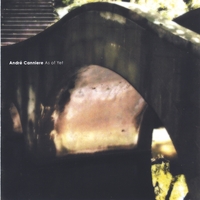
André Canniere Group - As Of Yet

As Of YetAs Of Yet is trumpeter André Canniere's debut. Four studio cuts are complemented by (and, in two cases, overlap with) three live recordings. The inclusion of the latter is a good thing, as they yield a rawer view of the band (and not only because of the cavernous sound quality) and a better take on the title track: the studio version of "As Of Yet" is rather dry and inexpressive, but live, timbral nuances give it expressiveness and the particularly punchy rhythm section gives it lift.

Canniere's at his best as composer and arranger: long melodies that unfurl majestically before suddenly flaring up and melancholy ballads both sit easily on top of often complex rhythmic and harmonic patterns. As a writer, Canniere's melodic sense is highly informed by contemporary rock and pop, so a downcast ballad like "The Rest" has as least as much in common melodically with quiet indie-rock as with the traditional jazz ballad. This sounds natural: the sound of a generation that's been developing, on both sides of the Atlantic, since the late '90s.

There's an excellent rapport between bassist Ike Sturm and drummer Ted Poor, which sets the basis for a context that seamlessly blends jazz, rock and pop rhythmic feels while balancing extensive arrangements with spontaneous decision-making. The extended groove that opens the live version of "Accelerated Decrepitude" is a good example of how well the pair works together.

The trumpeter is conspicuously generous with solo space but guides his soloists with an unoppressive invisible hand. As the band digs in more aggressively and buoyantly outside the recording studio, the tunes' building blocks inspire rather than hinder, which is what jazz composer/arrangers are supposed to do, right? On the studio version of "Accelerated Decrepitude," the best of the leader's five compositions, Canniere fluidly swaggers through the changes before saxophonist Josh Rutner (both Rutner and Poor are members of the Respect Sextet) leisurely turns one of the tune's riffs inside out. Rutner mines the same idea on the live version, but this time shares the work with Sturm and guitarist Ryan Ferreira.

Ferreira, showcased on "As Of Yet" and "The Rest," is a strikingly patient improviser who extends the compositions in fitting yet unexpected ways: fragmented, fairly static phrases only slowly expand their note and rhythmic choices. For example, on the live version of "As Of Yet," he's happy to engage the groove solely with oddly-paced block chords.

Monday, June 05, 2006

hated by the jazzpolice?


Teun Verbruggen on MySpace. I still get a kick out of Jozef dropping a bright, sweet melody into the maelstrom, roughly four and a half minutes into "fry" (a re-titled "certified 31% evil"?). "the visitor" is a track from the excellent (and much more straight-forwardly jazz) In Orbit. Not my favourite track, though.